

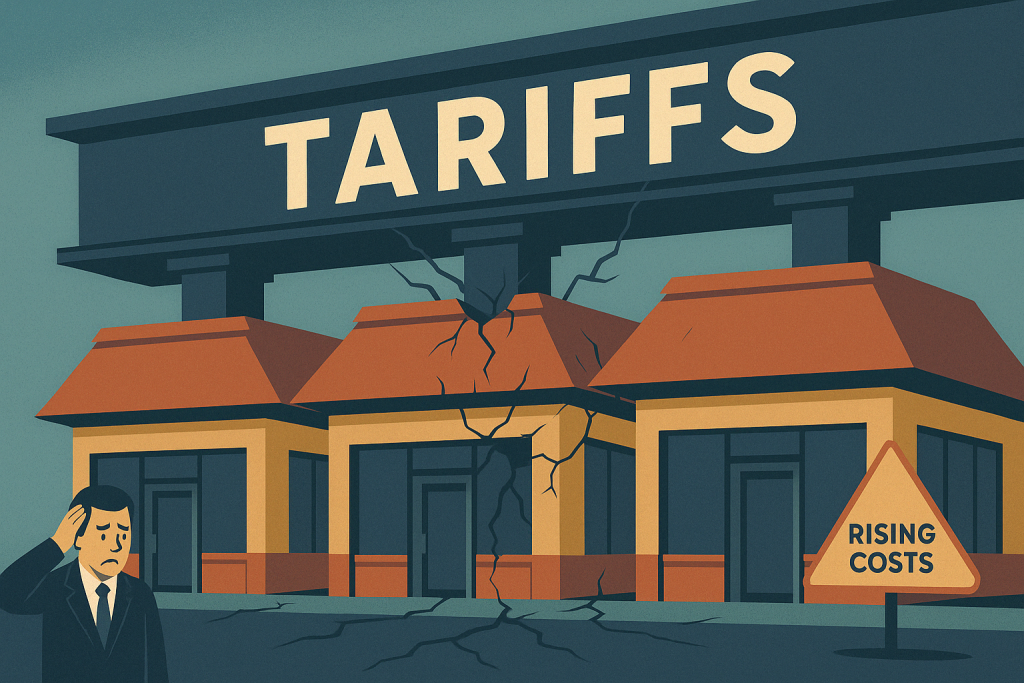
Tariffs aren’t just shaking up Wall Street headlines — they’re forcing franchise leaders to rethink their business models.
From rising costs to disrupted supply chains, multi-unit franchise owners and franchisors are already feeling the pressure. Whether you’re leading a multi-unit operation or overseeing a national brand, understanding the new tariffs are changing franchise business models in 2025 is critical to protecting profitability and securing long-term growth.
Here’s what you need to know to stay ahead of the curve.
Tariffs Are Raising Costs — And Franchisees Are Feeling It First
The latest round of tariffs, particularly those on steel, aluminum, and imported goods, is driving up equipment, supply, and product costs. Industries like restaurants, retail, and automotive services, where franchisees typically operate on thin margins, are especially vulnerable. According to The Franchise King, many franchisees have little flexibility to adjust pricing on their own, making it difficult to offset the financial strain. If tariffs persist, this pressure could lead to closures or slowed expansion across the franchise sector.
Some Businesses Are Adding Surcharges — But There Are Risks
To manage rising costs, some companies are introducing tariff surcharges at checkout rather than increasing base prices. As reported by CBS News, these surcharges are often small add-on fees that businesses hope will clarify to customers that price hikes are linked to government policies, not corporate greed. However, franchise leaders should be cautious — surcharges, if not clearly communicated, risk damaging consumer trust and brand reputation.
Supply Chains Are Under Pressure
In addition to higher costs, supply chain disruptions are a growing concern. Franchise.org notes that delays, shortages, and inconsistent product availability are becoming more common, particularly for businesses heavily reliant on imported materials. To mitigate risks, franchisors are encouraged to diversify suppliers, source domestically where possible, and strengthen relationships throughout the supply chain.
Legal Compliance Is Critical
Cost increases are not just an operational issue — they create legal implications as well. According to Franchising.com’s article, “New Tariffs Take Effect: What Franchisors and Franchisees Need to Know”, franchisors must review and update their Franchise Disclosure Documents (FDDs) if material changes to initial investments or operating costs have occurred. Failure to disclose significant financial impacts could result in legal liability and franchisee disputes.
Franchising.com’s article, “What Franchisors and Franchisees Need to Know About the New Tariffs” also emphasizes the importance of transparency and warns that franchisors should communicate proactively about cost increases to maintain trust with franchisees and avoid compliance issues.
Additionally, Sotos LLP underscores the need for franchisors to carefully review supply agreements to minimize exposure to unforeseen cost increases.
Some Brands Will Weather the Storm Better Than Others
Not all businesses will be impacted equally. S&P Global reports that companies with strong pricing power, domestic supply chains, or diversified sourcing strategies will be better positioned to withstand tariff pressures. Luxury brands and high-end franchises may find it easier to pass along cost increases, while budget-focused brands, particularly in the restaurant sector, could see tighter margins as tariffs compound other cost pressures like labor and interest rates.
How Franchise Leaders Can Navigate the Tariff Era
To adapt to these challenges, franchisors and franchisees should:
- Diversify suppliers and prioritize domestic sourcing.
- Communicate proactively with franchisees and customers about cost changes.
- Evaluate pricing strategies carefully, considering both surcharges and base price adjustments.
- Update legal documents to reflect new financial realities.
- Educate franchisees on supply chain management, cost control, and operational efficiency.
- Monitor evolving government policies to stay compliant and flexible.
Tariffs aren’t just a political headline — they’re a strategic business issue. By staying proactive, transparent, and flexible, franchise systems can protect their profitability and position themselves for long-term success.
How The Rawls Group Helps Multi-Unit Franchisees
At The Rawls Group, we understand that today’s challenges — from tariffs to talent retention — require more than quick fixes; they demand a long-term strategy. Our team specializes in helping multi-unit franchise owners build resilient, future-ready businesses. Through succession planning, strategic growth advisory, and leadership development, we empower franchisees to adapt to market shifts, protect profitability, and create sustainable success across generations. Whether you’re navigating operational risks or planning for leadership transitions, we provide the expertise and personalized support to help you thrive in a constantly changing environment.
Contact us to learn how we can help you navigate today’s challenges and position your franchise for long-term success.

Strategic Planning for Business Growth & Succession Success™
The only constant one can plan for is change. Strategic planning positions the business to address the probable, possible, and potential contingencies impacting business success. 
Click the following link for more drill-down resources on Strategic Planning
Sign up for our monthly e-newsletter to stay informed on how to overcome related succession planning issues.
Ask An Expert
"*" indicates required fields


