Most dealerships don’t lose value when they decide to sell. They lose value quietly, years earlier, when internal structure fails to keep pace with growth.
Margins can look fine. Stores can be profitable. But when leadership depth, alignment, and continuity aren’t clear, valuation risk builds invisibly.
That risk doesn’t just surface in a transaction. It shows up in tougher financing terms, slower OEM approvals, reduced leverage, and fewer strategic options.
This is the real issue facing dealer groups heading into 2026, and why dealership valuation risk now extends far beyond the P&L.
Quick Summary: What’s Driving Dealership Valuation Risk Today
Even if you’re not looking to sell, dealership valuation risk affects your flexibility, growth options, and long-term continuity.
Buyers, lenders, OEMs, and future successors are no longer evaluating dealerships based on financial performance alone. They’re scrutinizing:
- Leadership depth
- Organizational structure
- Alignment across owners, family, and key managers
When these elements aren’t clear, value erodes quietly—long before a transaction is ever discussed.
What’s Driving Dealership Valuation Risk Heading Into 2026
Margins are normalizing. Capital is tighter. Buyers are more selective. Yet many dealer groups haven’t reassessed the internal risks that now influence enterprise value.
We sat down with Alex Watterson of The Presidio Group, one of the most established automotive investment banks, with over $19.5 billion in completed transactions, to understand how dealerships are being evaluated today.
Presidio’s data reflects how buyers, lenders, and capital partners are underwriting risk differently heading into 2026.
Their conclusion: Valuation risk is no longer driven primarily by market volatility, it’s driven by structure, people, and alignment.
Why Strong Earnings Aren’t Enough Anymore
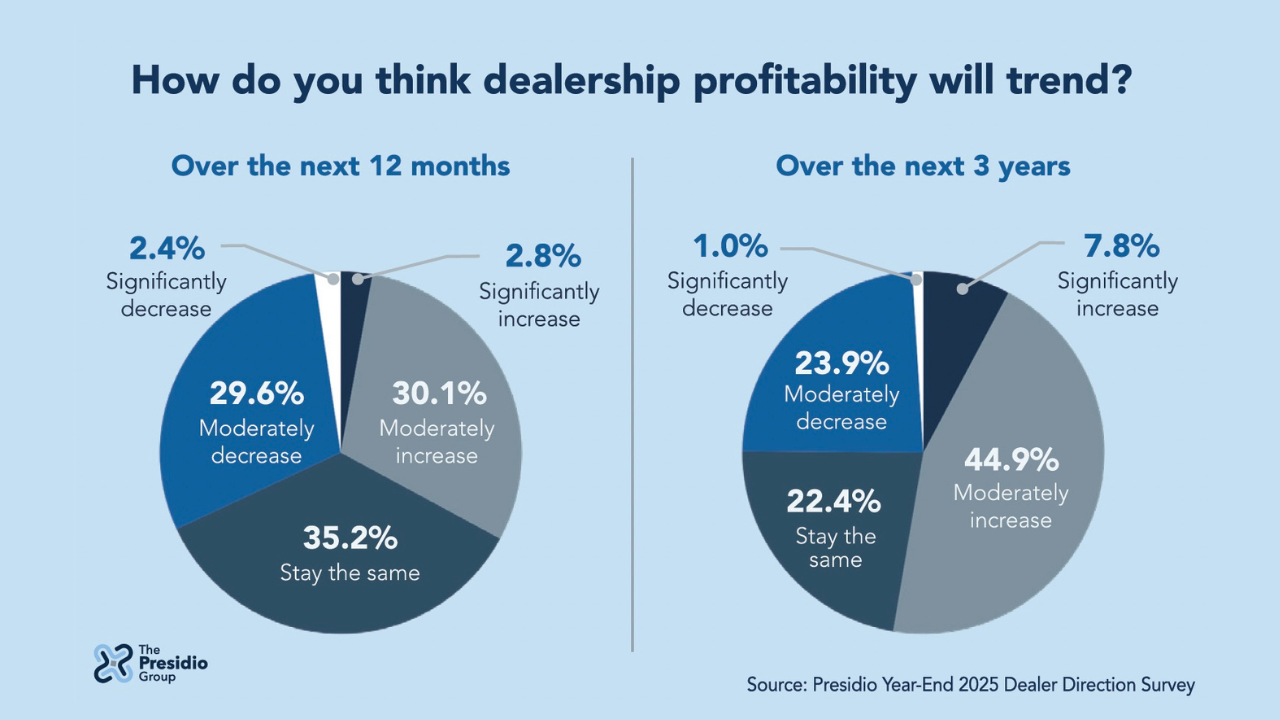
According to dealer survey and transaction data shared by The Presidio Group, more than 68% of dealers expect earnings to hold or improve in 2026.
Many are leaning into:
- Fixed operations
- Used vehicles
- F&I
But financial performance alone no longer tells the full story.
Buyers and lenders are now asking:
- Is performance dependent on a few key people?
- Is leadership stable, scalable, and aligned?
- Can the business operate without daily owner involvement?
- Are successors and key leaders clearly defined?
These questions directly affect valuation, deal terms, and deal certainty, even for dealers who aren’t planning to sell.
What Buyers, Lenders and OEMs Are Really Evaluating
Presidio’s deal flow shows a consistent pattern: human capital and operational structure now carry as much weight as profitability.
Today’s evaluators look for:
- Leadership depth across GM, controller, and department heads
- Operational and cultural stability
- Alignment between owners, family members, and key managers
- Clear governance and decision-making frameworks
- Continuity plans for critical roles
Why?
Because organizations with weak structure create friction, slow decisions, and introduce uncertainty, internally and during approvals, financing, or transactions.
“We’ve seen strong deals lose significant value, not because of financials, but because of leadership and alignment risks inside the organization.”
— Alex Watterson, The Presidio Group
What Quietly Lowers Dealership Valuation, Even If You’re Not Selling
These red flags weaken your strategic position with buyers, lenders, and OEMs:
- Overloaded or irreplaceable GMs
- Unclear next-generation roles or readiness
- No continuity plan for key operators
- Misalignment between family members and leadership
- Lack of decision-authority structure
- Heavy dependency on the owner or one or two individuals
Each issue increases risk. And risk quietly reduces value.
What High-Performing Dealer Groups Are Doing Differently
The strongest groups in Presidio’s pipeline are operating like investment-grade organizations.
They’re actively:
- Building leadership depth and succession readiness
- Clarifying communication cascades and decision authority
- Implementing governance to reduce family-business friction
- Aligning ownership strategy with operational reality
- Divesting underperforming assets and reinvesting in top performers
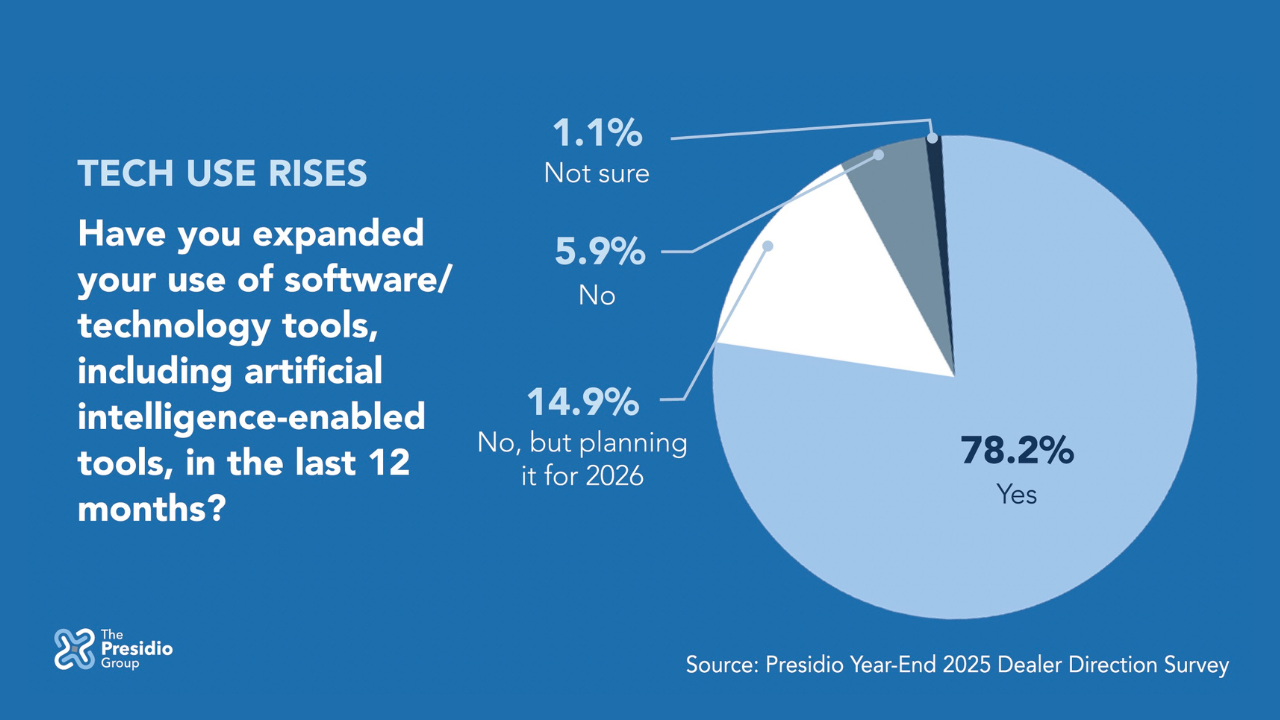
- Integrating technology and AI tools to reduce bottlenecks and scale efficiently
These aren’t “someday” initiatives. They are the new performance baseline.
Structure and Alignment: The Real Drivers of Enterprise Value
When internal structure and financial strategy align, dealer groups can grow, acquire, or navigate market shifts with far greater confidence.
Leadership depth, governance clarity, and continuity planning form the foundation of effective automotive succession planning for dealer groups navigating growth, financing, or internal transition.
For many dealer principals, the weeks leading into NADA serve as a natural checkpoint to step back, assess leadership readiness, and pressure-test whether structure, alignment, and continuity are strong enough for the decisions ahead.
This is where dealership valuation risk becomes tangible:
- Valuation improves when leadership isn’t owner-dependent
- Deal terms strengthen when successors are prepared
- Financing expands when lenders see bench strength
- Continuity becomes achievable when governance is in place
Without these, performance may still look strong, but the organization is strategically fragile.
More Insights for 2026 Dealer Strategy
- 2026 Dealership Strategy: What Strong Dealer Groups Are Doing Now: Learn how top-performing groups are preparing for margin pressure, OEM demands, and internal misalignment going into 2026.
- Hidden Leadership Crisis in Dealerships: Discover the structural red flags that are silently weakening your organization—and how top dealers are fixing them before it’s too late.
- Family in the Dealership: Clarity, Alignment & Strategy for 2026: See how top dealer groups are transforming family involvement into a competitive advantage by strengthening alignment across owners, next-gen, and key managers.
FAQ: Dealership Valuation Risk
What is dealership valuation risk?
Dealership structure affects valuation because buyers, lenders, successors, OEM’s, talent and strategic partners assess how dependent the business is on specific individuals and how clearly decisions are made. When a dealership relies too heavily on one or two people, lacks defined decision authority, or has no succession or continuity plan, it increases dealership valuation risk. That perceived risk leads to lower valuations, tougher deal terms, slower transactions, or reduced access to capital, especially for dealer groups navigating growth, consolidation, or generational transition.
What internal red flags lower dealership valuation?
Internal red flags that lower dealership valuation include overloaded or irreplaceable GMs or C-level leaders, unclear successor readiness, misalignment between family members and key managers, and the absence of governance or decision-making frameworks. These issues increase dealership valuation risk by creating friction, slowing execution, and reducing confidence for OEMs, buyers and lenders; even when financial performance remains strong.
How can dealer groups reduce dealership valuation risk?
Dealer groups can reduce dealership valuation risk by building leadership depth, clarifying roles and decision authority, implementing governance frameworks, and creating continuity plans for key positions. Improving alignment across owners, family members, and senior managers reduces dependency risk and strengthens execution. Tools like the Dealer Growth & Continuity Scorecard help dealer groups identify valuation exposure and prioritize actions before risk impacts deal terms or flexibility.
Do dealer principals need to worry about dealership valuation risk if they are not selling?
Yes, dealer principals need to worry about dealership valuation risk even if they are not selling. Valuation influences financing options, lender confidence, OEM and partner relationships, and long-term strategic flexibility. Addressing dealership valuation risk proactively gives dealer groups more control, whether the goal is growth, acquisition, succession, or holding the business long-term.