

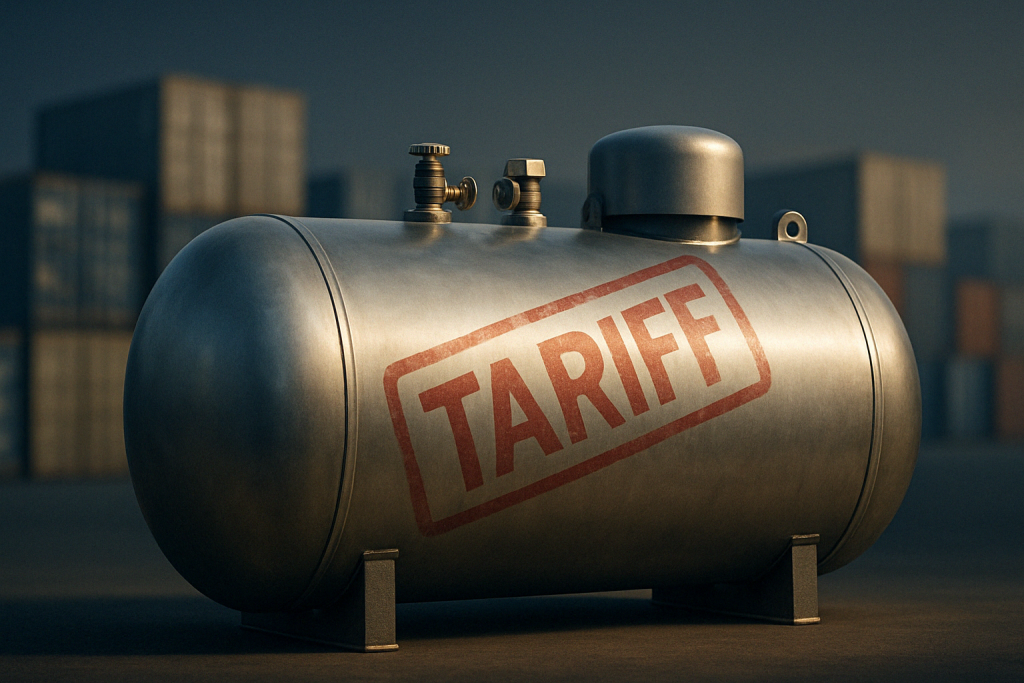
Did you know that steel tariffs have driven propane tank prices up by as much as 25%?
According to Alliance Truck & Tank, the 25% tariff on imported steel led to propane tank price increases between 20% and 25%. For propane dealers across the U.S., the impact of global trade policies is no longer an abstract threat — it’s a real, rising cost of doing business.
As the U.S. revisits aggressive tariff strategies, particularly targeting steel, aluminum, and Chinese imports, propane companies are feeling the squeeze from two directions: higher equipment costs and increasing market volatility. Understanding how these forces work — and how to adapt — will be crucial for dealers aiming to stay competitive in 2025 and beyond.
Rising Equipment Costs: Tanks, Valves, and Infrastructure Hit Hard
The first and most direct effect of tariffs is on the cost of physical assets. Steel tariffs, first imposed during the Trump administration and potentially returning in expanded form, have already led to significant price hikes for propane tanks and related infrastructure. Manufacturers now pay more for raw materials and pass those costs down the chain — hitting small and mid-sized propane dealers the hardest. Compounding the problem, long lead times can disrupt seasonal planning, leaving companies scrambling during peak demand.
Alliance Truck & Tank reports that propane tank prices rose 20–25% following the initial tariffs in 2018, with delivery timelines lengthening due to material shortages — and with new tariffs in 2025, it appears history is beginning to repeat itself.
Export Volatility: A Looming Risk to Domestic Pricing
While higher equipment costs are painful, the bigger, longer-term risk may come from disrupted propane exports. Propane exports have been essential for balancing domestic supply and maintaining stable prices. However, as East Daley Analytics warns, new tariffs and retaliatory trade measures could choke off demand from key markets like China.
If exports slow, U.S. inventories could balloon, causing domestic propane prices to tumble. While that might seem like good news for consumers in the short term, it threatens the profitability of producers and dealers alike, destabilizing investment in infrastructure and leading to longer-term supply chain challenges.
The Broader Energy Picture: Lessons from Clean Energy Tariffs
The propane industry isn’t alone in facing tariff-related headwinds. The clean energy sector offers a cautionary tale. As TIME reports, tariffs on solar panels and metals during the Trump years increased costs and slowed project growth in the U.S., handing competitive advantage to foreign firms.
Similarly, CSIS found that tariffs introduced uncertainty, making it harder for energy companies to plan and invest. For propane dealers, this underscores the need to anticipate longer-term risks — not just immediate cost hikes.
Legal and Contractual Fallout: Prepare for Tougher Negotiations
Tariffs don’t just raise prices; they complicate contracts and supply agreements. According to Winston & Strawn LLP, energy companies are increasingly forced into renegotiating terms, invoking force majeure clauses, or seeking price adjustments as costs escalate unpredictably.
Propane dealers should proactively review their procurement contracts to include tariff-related contingencies, renegotiate supply terms where possible, and lock in pricing early to shield themselves from market shocks.
Staying Proactive: What Propane Dealers Should Do Now
As the National Propane Gas Association (NPGA) advises, industry players must stay engaged in public policy discussions and advocate for trade measures that recognize the unique needs of the propane sector. Here’s how propane dealers can protect their businesses:
- Diversify Suppliers: Work with multiple vendors to avoid bottlenecks.
- Lock in Prices Early: Secure long-term contracts where possible to hedge against cost spikes.
- Invest in Refurbished Equipment: Consider used or refurbished tanks to manage capital costs.
- Monitor Export Markets: Stay informed about global demand trends that could affect domestic pricing.
- Advocate Through Associations: Support organizations like NPGA that lobby for fair trade practices.
How The Rawls Group Helps Propane Dealers
Navigating the complex intersection of tariffs, global markets, and succession planning is no small task. That’s where The Rawls Group comes in. With decades of experience helping energy companies build resilient, future-ready businesses, The Rawls Group offers tailored strategies in leadership development, strategic planning, and continuity management. We understand the unique challenges propane dealers face — from rising costs to shifting regulatory landscapes — and we’re committed to helping you build a business that thrives across generations.
Contact us today to learn how we can help you secure your legacy in an increasingly volatile world.
Strategic Planning for Business Growth & Succession Success™
The only constant one can plan for is change. Strategic planning positions the business to address the probable, possible, and potential contingencies impacting business success. 
Click the following link for more drill down resources on Strategic Planning
Sign up for our monthly e-newsletter to stay informed on how to overcome related succession planning issues.
Ask An Expert
"*" indicates required fields


