The dealer principal OEM approval process carries more valuation weight today than most multi-rooftop groups realize. Once you’re running seven, ten, or more rooftops across major brands, OEM confidence, lender assumptions, and blue sky leverage reflect how the enterprise is built.
Quick Summary
The dealer principal OEM approval process influences OEM confidence, lender underwriting, and valuation outcomes for multi-rooftop dealer groups. Manufacturers review liquidity, operating history, executive bench depth, governance clarity, and capital capacity tied to facility and program requirements.
Groups that show leadership continuity and capital flexibility defend stronger multiples. Groups that appear dependent, misaligned, or capital-tight face tighter scrutiny and pricing pressure.
Once You’re Operating at Scale, Structure Drives Valuation
Performance still matters. Fixed ops can still be steady. OEM relationships still anchor growth.
At scale, structure drives valuation. Founder-centric decision models become visible risk.
The operating model that built your dealership group is different from the structure required to protect it under OEM and capital scrutiny.
The Top 150 dealer groups now control more than a quarter of U.S. franchises. Public operators and disciplined private groups run with deep benches, defined authority lines, coordinated capital planning, and visible leadership transition across rooftops. Independent groups are measured against that standard continuously.
That comparison is quiet, but constant. Every approval, acquisition, recapitalization, and open point discussion is evaluated against operators who look structurally durable under transition.
In a recent discussion on Daily Dealer Live with Car Dealership Guy, we addressed how bench depth, capital structure, and principal transition intersect once a group reaches this size. The patterns are consistent across markets.
For more than four decades, our work with large, capital-intensive enterprises has shown the same principle: visible leadership continuity and defined governance increase negotiating leverage. Our team has guided hundreds of capital-intensive family enterprises through leadership and ownership transitions. The Succession Matrix® framework connects leadership depth, ownership clarity, and scenario planning into one coordinated structure.
Understanding the Dealer Principal OEM Approval Process at Scale
During the dealer principal OEM approval process, manufacturers evaluate more than financial documentation. They assess:
- Liquidity and personal balance sheet strength
- Brand operating track record
- Facility and image program exposure
- Stability of the executive bench
- Capital capacity to support future OEM requirements
Manufacturers are not only reviewing capability. They are evaluating durability. They want confidence that performance, compliance, and brand representation remain stable through ownership transition.
Visible leadership continuity and defined authority lines increase OEM confidence. When the organization appears concentrated around one or two individuals, scrutiny intensifies.
Factory hesitation alters leverage beyond approval timing. It influences acquisition approvals, open point conversations, and long-term brand alignment. A single perceived weakness can slow growth strategy across multiple rooftops.
Dealership successor approval extends beyond the incoming principal. It reflects how durable the enterprise looks under transition.
When Too Much Still Runs Through One Office
Many dealership groups were built with the principal at the center of every major decision:
- Acquisitions.
- Capital commitments.
- OEM negotiations.
- Key executive hires.
That model drives growth. At scale, it concentrates exposure.
When too much still runs through one office, lenders price risk differently. Buyers assume dependency. Manufacturers question continuity.
Depth at this level means:
- Decisions move when the principal steps back
- Successors are visible for GM, CFO, and fixed ops leadership
- Incentives retain key operators
- Processes reduce reliance on individual memory
Leadership and management continuity protects leverage across rooftops. Groups that look deep command stronger multiples. Groups that look thin are discounted.
Executive Transitions and Layered Risk
Across many larger dealer groups, leadership transitions are stacking up.
- The GM who integrated acquisitions over decades.
- The CFO who structured floorplan relationships.
- The fixed ops leader who stabilized technician retention.
When executive shifts converge with principal transition, perceived risk accelerates. Timing compression magnifies exposure. What could have been a controlled evolution becomes a visible inflection point.
Buyers adjust multiples. Lenders adjust underwriting assumptions. OEM approval scrutiny intensifies when bench depth appears reactive rather than intentional.
Scenario planning disciplines allow ownership to pressure-test timing risk before it becomes visible externally.
Capital Structure Under Current Conditions
EV infrastructure mandates, facility upgrades, and OEM program commitments have required meaningful capital deployment across most major brands.
During OEM approval dealership ownership transfer reviews, manufacturers and lenders focus quickly on:
- Debt service coverage
- Working capital depth
- Floorplan exposure
- Personal guarantee concentration
- Facility commitments tied to future brand expectations
Capital flexibility influences negotiating leverage. When balance sheets are tight and guarantees are concentrated, timing flexibility narrows. That constraint becomes visible during diligence.
If principal transition collides with tight capital capacity, negotiating leverage compresses immediately. When capital structure and leadership continuity align, ownership controls timing, optionality, and pricing.
At scale, the dealer principal OEM approval process functions as a valuation checkpoint.
What Sophisticated Buyers Evaluate
Blue sky conversations at scale reflect structure alongside EBITDA. Sophisticated buyers review:
- Bench strength beyond the founder
- Stability of key managers
- Clean shareholder and buy-sell agreements
- Durable OEM relationships
- A balance sheet that holds under leadership change
They also evaluate decision clarity. Who holds authority? How are disputes resolved? How quickly can leadership act without escalation?
Two enterprises with similar earnings command materially different multiples based on structural depth. Multiple compression rarely starts with performance decline. It begins with perceived fragility.
Ownership alignment also affects optics under review. When shareholder expectations, family roles, or buy-sell terms are unclear, that instability becomes visible during OEM approval and lender diligence. Manufacturers and capital partners evaluate whether control, authority, and decision rights are defined across generations and ownership groups. Internal misalignment does not remain internal at scale — it influences confidence. Clear governance preserves negotiating leverage.
Automotive succession planning, when aligned with growth and governance strategy, strengthens that depth.
Key Takeaways
- The dealer principal OEM approval process evaluates structural depth, not just successor credentials.
- Executive bench strength directly influences negotiating leverage.
- Founder dependency becomes visible risk at scale.
- Ownership alignment and governance clarity influence OEM and lender confidence.
- Capital structure discipline protects valuation under scrutiny.
OEM Approval Is a Snapshot. Your Structure Is the Signal
By the time OEM approval becomes a gating issue, your enterprise has already been evaluated. The real question isn’t whether you’ll get approved. It’s how your structure is being interpreted, by OEMs, lenders, and buyers, before that moment.
A disciplined review helps surface:
- Where leadership depth may not support OEM confidence
- Where ownership and governance create uncertainty under scrutiny
- Where capital structure limits flexibility during transition
- Where executive transitions could compress timing and leverage
- Where your enterprise still reflects founder dependency at scale
For a broader view of how these factors connect, start with Automotive Succession Planning.
To evaluate how your leadership, ownership, and continuity align as a system, the Succession Matrix provides a structured lens used across capital-intensive enterprises.
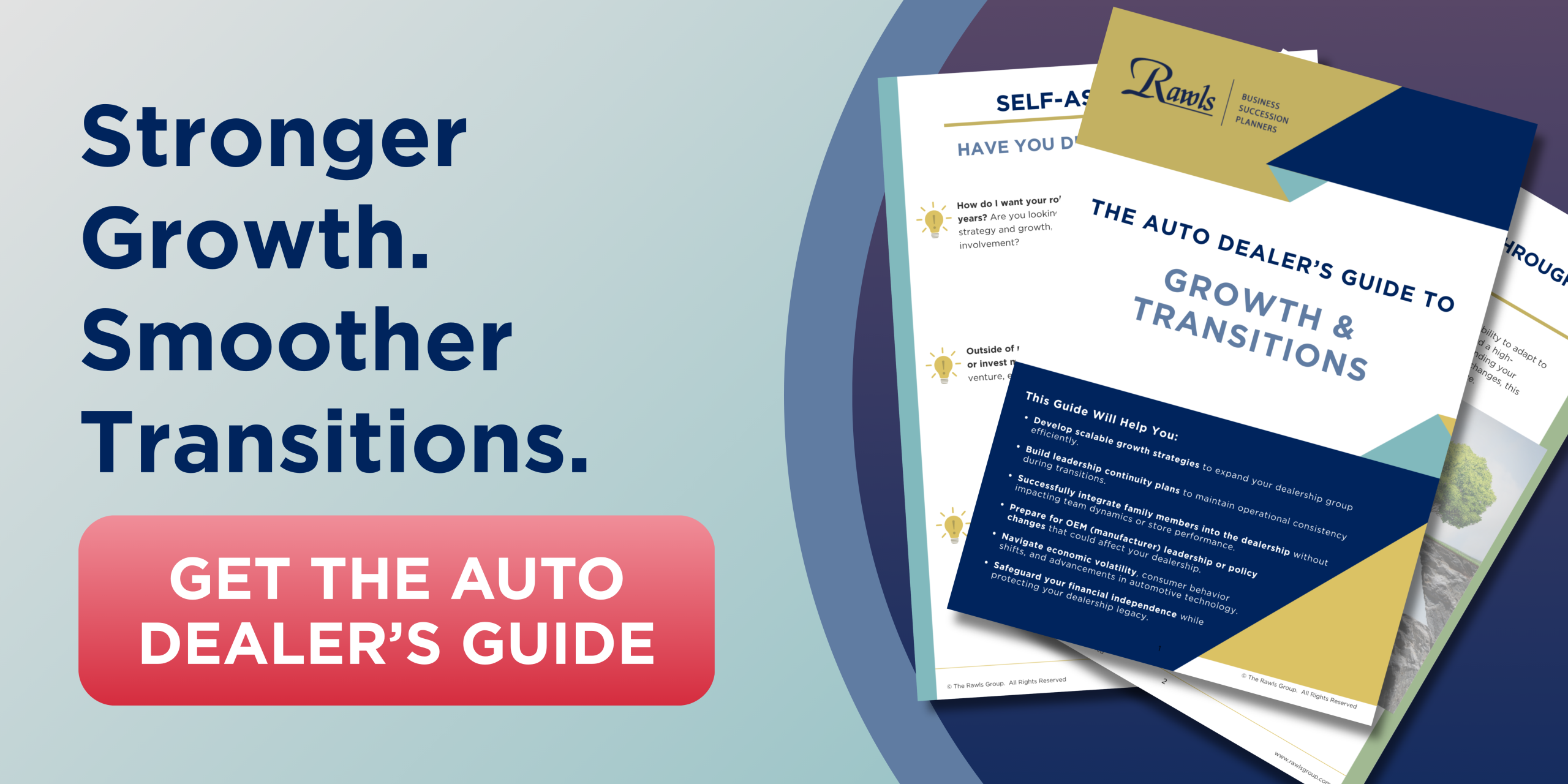
For a faster, objective baseline, the Dealer Growth & Continuity Scorecard highlights where your group may be exposed across governance, bench strength, and continuity.
If you want to see how your dealership would be evaluated under OEM approval, lender diligence, or a capital event, we can compare notes. Request a confidential review of your dealership’s structure and continuity profile with an automotive succession advisor.
FAQs About the Dealer Principal OEM Approval Process and Valuation Impact
What is the dealer principal OEM approval process?
The dealer principal OEM approval process is the formal manufacturer review required before approving a change in dealership ownership or control. It evaluates liquidity, operating history, executive bench stability, facility commitments, and long-term brand alignment before approval is granted.
How does OEM dealer principal approval affect dealership valuation?
OEM dealer principal approval influences how buyers and lenders assess transition risk. Groups with visible leadership continuity and capital strength command stronger multiples. If approval exposes management dependency or capital strain, valuation leverage compresses.
What does dealership successor approval typically require?
Dealership successor approval typically requires proof of liquidity, leadership capability, continuity across key roles, and capital capacity to support facility and brand obligations. Manufacturers also assess whether ownership transfer aligns with long-term brand strategy and market stability.
Leadership Continuity: Fuel Growth and Empower Succession Strategies
Top talent is hard to find these days, so when you find them, it is critical you have the strategies in place to retain and motivate your key people. Click the following links for more drill-down resources on Leadership and Management Continuity.

Sign up for our monthly e-newsletter to stay informed on how to overcome related succession planning issues.